

Wrongful Arrest in Chicago: What Makes an Arrest Illegal and What to Do Next

By The Law Offices of Haytham Faraj · Updated August 9, 2026
An arrest becomes illegal when police lack probable cause—a reasonable belief, based on specific facts, that you committed a crime. If you were arrested without a warrant or probable cause, your constitutional rights were violated. This guide explains what makes an arrest illegal, your immediate steps, and how to hold law enforcement accountable through federal civil rights claims and state tort actions.
Key Takeaways
- An arrest is illegal when police lack probable cause—a reasonable belief based on specific facts that you committed a crime.
- A full custodial arrest (handcuffed, transported, booked) requires probable cause; if lacking at the moment of restraint, the arrest is illegal regardless of later evidence.
- Immediately invoke your right to remain silent and request an attorney; do not try to explain or argue during the arrest.
- Document physical injuries with photographs right after release and seek medical attention to create a record linking injuries to the arrest.
- Send spoliation letters to demand preservation of all footage and data, and secure witness contact information before it is lost.
What Constitutes an Illegal Arrest?
An arrest becomes illegal the moment law enforcement detains you without probable cause. That constitutional violation is the foundation of every civil rights claim that follows.
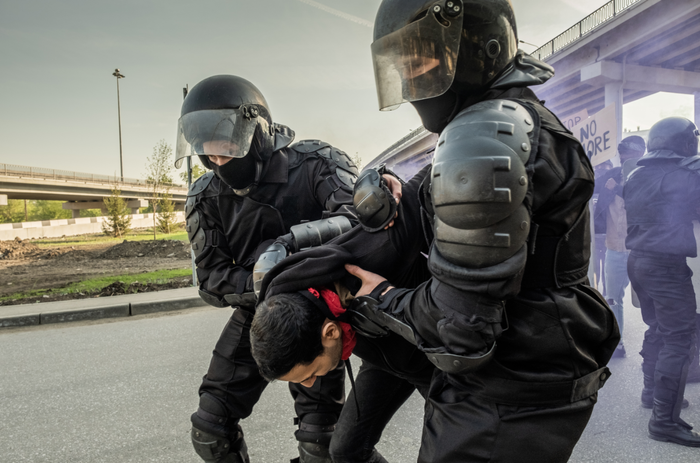
Probable cause is not a hunch, a badge, or an officer's irritation. It is a specific, articulable set of facts that would lead a reasonable officer to believe you committed a crime. When that standard is missing, the arrest crosses the line from lawful enforcement into a Fourth Amendment violation, and the officer and the department can be held accountable.
The most common illegal arrest scenarios are not ambiguous edge cases. An officer stops you because you matched a vague description. Or because you refused to answer questions. Or because you were recording them in public—an act the First Amendment plainly protects. An arrest made solely because you exercised free speech rights is not a close call. It is a constitutional injury.
The same is true when police arrest the wrong person on a warrant meant for someone else and hold them for hours or days without verifying identity. That is not a mistake the law excuses. It is a seizure without legal justification.
There is a critical distinction the courts recognize that most people miss: a detention short of arrest requires only reasonable suspicion, but a full custodial arrest demands probable cause. If you are handcuffed, placed in a squad car, transported to a station, and booked, you have been arrested. If the officer lacked probable cause at the moment that restraint occurred, the arrest is illegal—regardless of what evidence surfaces later. The Supreme Court has been clear on this point for decades. What matters is what the officer knew at the time of the seizure, not what an investigation might eventually uncover.
Police departments and their insurers rely heavily on the argument that a reasonable officer could have believed probable cause existed, even if this particular officer did not. That is the standard courts apply, and it is a high bar for plaintiffs. But it is not impenetrable. When an arrest is predicated on fabricated evidence, a retaliatory motive, or a knowing disregard for exculpatory facts, qualified immunity does not shield the officer. Those cases demand trial-ready attorneys who prepare every civil rights case as if a jury will decide it—because sometimes they do.
The evidence must be gathered immediately: body camera footage, surveillance video, witness statements, and dispatch logs. Delay allows the narrative to harden in the department's favor. An illegal arrest is not merely an inconvenience to be endured. It is a constitutional injury that, properly litigated, can force institutional change and set precedent that protects others from the same abuse.
Step-by-Step: What to Do Immediately After an Illegal Arrest
Your first moves after an unlawful arrest determine whether the truth survives or gets buried. Police departments and municipal attorneys begin building their defense the moment the handcuffs click. You must act with equal urgency—not out of panic, but out of precision. Every hour that passes without documented evidence is an hour the other side uses to construct a narrative that protects the badge and buries your civil rights.
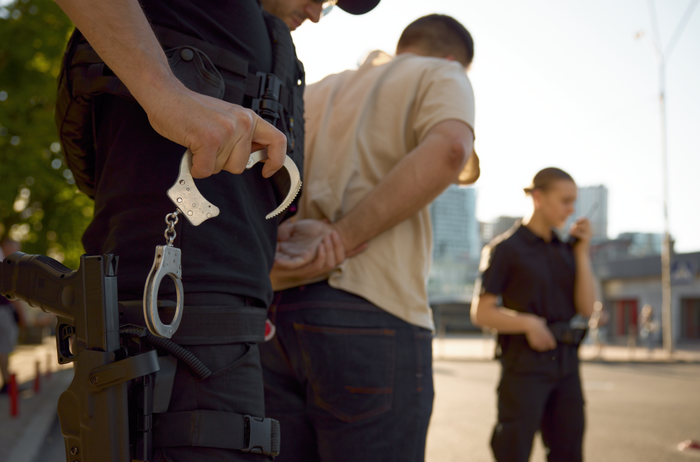
1. Invoke your right to remain silent—and use it. Do not explain, argue, resist, or try to talk your way out of the arrest on the street. State clearly: "I am invoking my right to remain silent and I want an attorney." Then stop talking. Anything you say—even a justified, angry outburst—will be twisted into a post-hoc justification for the arrest. The time to fight is in federal court, not in the back of a squad car.
2. Document your physical condition immediately upon release. Photograph every bruise, abrasion, red mark, or swelling the moment you are able—before any healing begins. If you were tased, photograph the probe marks. If you were thrown to the ground, photograph the scrapes and torn clothing. These images are irreplaceable evidence of excessive force that can transform a false arrest case into a civil rights claim carrying substantial damages. Our firm's wrongful death and police misconduct practice has seen cases where physical evidence proved decisive.
3. Preserve what the department will not. Immediately send spoliation letters demanding preservation of all surveillance footage, body-worn camera video, dashcam recordings, 911 call audio, and any black box or vehicle telemetry data. Police agencies routinely "lose" or overwrite footage that contradicts their reports. A spoliation letter puts them on legal notice that destruction of evidence will itself become part of your claim.
4. Identify and secure witnesses before they scatter. Write down names and contact information for anyone who saw the arrest—bystanders, passengers, neighbors, other arrestees. Do not rely on the police to collect this information accurately. Witnesses who saw an officer fabricate probable cause or use gratuitous force are the difference between your word and a jury verdict that holds the department accountable.
5. Seek medical attention—even if you think you are fine. Adrenaline masks injuries. A medical record created within hours of the arrest links your physical condition directly to the officer's conduct, defeating the defense that your injuries came from some other source. This is not about building a personal injury file. It is about creating an evidentiary chain that no municipal attorney can break.
6. Contact trial-ready attorneys who will not flinch. Most lawyers who advertise for police misconduct cases have never tried one to verdict. They settle quietly, collect their fee, and leave your precedent unset. The Law Offices of Haytham Faraj prepares every case for jury trial from day one—because a government defendant only respects the threat of a public verdict. We take on police departments, county sheriffs, and politically sensitive defendants. We do not fold when the optics get difficult. We fight. Those Who Can, Must Fight To Protect Those Who Cannot Protect Themselves.
How to File a Complaint Against the Arresting Officer or Department
Filing a formal complaint is an act of accountability. It creates an official record, triggers an internal investigation, and can serve as critical evidence if you later pursue a civil rights lawsuit under Section 1983. Do not let anyone convince you that complaining is futile. It is not. It is a necessary step in forcing a department to confront misconduct, and it often reveals patterns of abuse that a single arrest, viewed in isolation, would conceal.

In Chicago, complaints against sworn officers are handled by the Civilian Office of Police Accountability, known as COPA. This agency operates independently from the Chicago Police Department and has the authority to investigate allegations of excessive force, false arrest, illegal search, verbal abuse, and other misconduct. You can file your complaint in person at COPA's office, by phone, by mail, or through their online portal. The process requires you to provide your name and contact information, the date and location of the incident, the names or badge numbers of the officers if you know them, and a detailed narrative of what occurred. Anonymous complaints are accepted but carry less weight and limit the investigator's ability to follow up. Once filed, COPA assigns a case number and logs the complaint into a database that is subject to public records requests—this is the transparency mechanism that departments fear most.
If the arrest occurred outside Chicago but within Cook County, the specific municipality's internal affairs division or a county-level civilian review board may have jurisdiction. For Los Angeles residents, the equivalent body is the Los Angeles Police Commission and its Office of the Inspector General, or the Sheriff's Civilian Oversight Commission for LASD matters. The process mirrors COPA's: submit a statement, identify the officers, and request a formal investigation. In both cities, you have a right to receive a finding—sustained, not sustained, exonerated, or unfounded—though the timeline can stretch months.
Beyond the civilian oversight route, you can also file directly with the Department of Justice's Civil Rights Division. While the DOJ rarely prosecutes individual officers criminally, a federal complaint signals that you are serious and that the case has broader implications. This is not about a payout. This is about building a record that trial-ready attorneys can weaponize in federal court. We prepare every case as if a jury will decide it, and a well-documented complaint file is often the foundation of a precedent-setting victory.
Qualified Immunity and Its Impact on False Arrest Claims
Qualified immunity is the single greatest obstacle to holding police officers accountable for an illegal arrest. It is a judge-made doctrine that shields government officials from civil liability under 42 U.S.C. § 1983 unless the victim can show the officer violated a "clearly established" constitutional right. In practice, this means a court can rule that your arrest was unconstitutional—that the officer lacked probable cause, lied on the affidavit, or retaliated against your free speech—yet still grant the officer immunity because no prior case with nearly identical facts put them on notice. This is not a loophole. It is a chasm. And it is where many civil rights claims die before a jury ever hears the evidence.
The standard demands an excruciating level of specificity. It is not enough that the Fourth Amendment prohibits arrest without probable cause. A plaintiff must point to existing precedent that would have made it clear to every reasonable officer that the specific conduct at issue was unlawful. The Supreme Court emphasized in District of Columbia v. Wesby (2018) that the clearly-established inquiry must be defined with "high specificity" and not at a general level. This ruling has been weaponized by police defense counsel nationwide to dismiss false arrest claims at summary judgment, often before discovery is complete.
The practical impact is devastating. An officer can fabricate a justification, arrest you for filming them in public, and face no civil consequence if no prior case involved a plaintiff filming from that exact angle, in that exact jurisdiction, under that exact lighting. The doctrine rewards novelty in misconduct. For our clients—activists, journalists, and community members targeted for their speech or presence—qualified immunity is often the first wall we must breach. We do it by pleading alternative state tort claims that are not subject to the doctrine, by identifying the specific factual parallels in controlling circuit precedent, and by building a record that forces the court to confront the officer's subjective intent. When we take a false arrest case, we prepare it for trial from day one precisely because qualified immunity motions are inevitable. We do not file to settle. We file to establish the precedent that the next victim will need.
False Arrest Under 42 U.S.C. § 1983 vs. State Tort Law: Strategic Considerations
You have two primary paths to hold the government accountable for a false arrest, and the choice between them is not a technicality. It is a strategic decision that shapes everything from the courthouse you walk into to the precedent you can set. You can sue under 42 U.S.C. § 1983 in federal court, or you can bring state tort claims like false imprisonment in state court. Often, you do both in the same lawsuit. The difference is what each weapon is designed to destroy.
Section 1983 is the federal civil rights statute that lets you sue any person acting under color of state law who deprives you of a constitutional right. A false arrest violates the Fourth Amendment's prohibition on unreasonable seizures. The strategic advantage of a § 1983 claim is that it puts a constitutional violation on the record. You are not just arguing that an officer made a mistake under state law—you are proving that the government itself violated the supreme law of the land. That matters for accountability. It also matters for attorney's fees: under 42 U.S.C. § 1988, a prevailing plaintiff in a § 1983 case is entitled to reasonable attorney's fees from the defendant. This fee-shifting provision means a police department or municipality pays your legal costs, which strips them of the financial attrition strategy they often use to exhaust plaintiffs into dropping their case. State tort claims generally do not carry mandatory fee-shifting.
State tort law—in Illinois, this is a claim for false imprisonment—requires you to prove that the officer restrained you without reasonable grounds to believe you committed an offense. The elements are often simpler to establish than a constitutional violation, and state courts can sometimes move faster than the federal docket. But state law does not provide for automatic attorney's fees, and it does not carry the same public weight. A state court judgment says an officer acted wrongfully. A federal court judgment under § 1983 says a constitutional right was violated, which carries the force of precedent for every person in that jurisdiction.
The real power lies in combining them. A complaint that pleads both a § 1983 claim and a state false imprisonment claim preserves every avenue of recovery. You force the defendants to fight on two fronts. At The Law Offices of Haytham Faraj, we prepare every false arrest case for trial from day one, filing in federal court when the facts support a constitutional violation and never shying away from naming individual officers and their municipal employers. This is not about selecting the easier route. It is about building a case that a jury can understand and that a government defendant cannot outlast.
Damages in False Arrest Cases: What You Can Recover
You recover more than a dollar figure. You recover the truth—set down in a public record that cannot be erased or spun. In a false arrest case under 42 U.S.C. § 1983 and parallel state tort law, the damages you pursue are the mechanism by which a jury names the harm done to you and orders accountability. The law breaks these into two categories: compensatory and punitive.
Compensatory damages make you whole for what was taken. They fall into economic and non-economic losses. Economic losses are the tangible costs: lost wages from the job you missed while locked in a holding cell, the bond premium paid to a bondsman, the fees charged by a criminal defense attorney to unwind a charge that never should have been filed. Keep every pay stub, every invoice, every receipt—these are the building blocks of a precise demand.
Non-economic losses reach the injury that no receipt can capture. Under the Illinois Pattern Jury Instructions for § 1983 claims, the jury is instructed to consider the physical discomfort and suffering you endured during the detention, the humiliation of being handcuffed in front of neighbors or colleagues, the mental anguish of a night in a cell not knowing if anyone knows where you are, and the damage to your reputation in your community. The instruction directs jurors to use their common sense and life experience to assign a number to what that degradation cost you—and that number can be substantial.
Punitive damages serve a different purpose. They are not about your loss; they are about the officer's conduct. To recover punitive damages under § 1983, you must prove the officer acted with reckless or callous indifference to your federally protected rights. The jury is asked whether the defendant's actions were so egregious that punishment is warranted to deter that officer—and every other officer—from doing it again. This is where a case moves from compensation to precedent. When a jury awards punitive damages, it sends a signal that a department cannot budget for brutality as a cost of doing business. Our trial team prepares every false arrest case for that moment, because we do not believe in quiet resolutions that leave the system unchanged.
Common Police Defenses in False Arrest Lawsuits and How to Counter Them
When you take a stand against a wrongful arrest, the government's legal machinery does not retreat quietly. It erects walls.
The most common defense is probable cause—the assertion that, regardless of what the officer actually knew at the time, a reasonable officer could have believed a crime was committed. This is a deliberately low bar, and police attorneys will scour the record for any shred of justification after the fact. We counter this by proving what the officer knew—and, critically, what the officer ignored. An arrest based on a hunch, a protected activity like free speech, or a witness's uncorroborated tip falls apart when we force the department to produce every radio transmission, body camera minute, and contemporaneous report. If they cannot point to specific, articulable facts that existed before the handcuffs went on, their probable cause defense is a fiction.
A second shield is qualified immunity, which protects officers unless they violated "clearly established" statutory or constitutional rights. This doctrine is not a get-out-of-court-free card. We defeat it by showing that the right at issue—freedom from seizure without probable cause—is so fundamental that no reasonable officer could claim ignorance. We cite the exact moment in the arrest where force or detention exceeded any legitimate purpose, and we frame the violation in a way that mirrors binding precedent, not a novel legal theory. When an officer arrests someone for filming in public or for refusing to disperse from a lawful protest, the law is already clear. We make sure the court sees that.
The third defense is the "good faith" exception, where officers argue they acted on a warrant or statute later found invalid but believed it valid at the time. We dismantle this by exposing the warrant affidavit itself. If the affidavit relied on deliberately false statements or omitted exculpatory facts—a Franks violation—the good faith shield evaporates. We demand the full investigative file and depose the affiant officer under oath. A warrant obtained through deception is not a shield; it is itself a violation.
Finally, departments often argue the arrest was a lawful "investigative detention" requiring only reasonable suspicion, not probable cause. We counter by demonstrating the length, intrusiveness, and circumstances of the detention. Handcuffing, transporting to a station, and holding someone for hours transforms a stop into a de facto arrest. Once that line is crossed, the full weight of the Fourth Amendment applies, and the government must answer for it. We prepare every case to force that answer at trial, because a precedent that protects you protects everyone.
Self-Assessment: Was Your Arrest Illegal?
An illegal arrest is not just a procedural mistake. It is a constitutional violation that strikes at the core of your civil rights. Law enforcement officers cannot detain you simply because they want to. They must have probable cause: a reasonable belief, based on specific facts, that you committed a crime. If that foundation was missing, your arrest was unlawful, and the people who violated your rights can be held accountable. The following checklist cuts through the confusion so you can evaluate what happened to you with clarity.
1. Did the officer state a reason for stopping or detaining you? An officer must be able to articulate a specific, lawful basis for the initial stop—a traffic violation, a matching suspect description, or observed criminal activity. A vague hunch or a "suspicious person" label does not satisfy the Fourth Amendment.
2. Did the officer have probable cause to arrest you? This is the central question. Probable cause means facts and circumstances within the officer's knowledge that would lead a reasonable person to believe a crime was committed. If the officer arrested you based on nothing more than your presence in a high-crime area, your race, or your refusal to consent to a search, probable cause was absent and the arrest was illegal.
3. Were you arrested for exercising a protected right? If you were taken into custody while filming police activity in public, participating in a protest, or verbally challenging an officer without using threats or fighting words, your arrest may be a direct attack on your First Amendment rights. An arrest under these circumstances is not just wrongful—it is a SLAPP tactic dressed in a badge.
4. Did the officer use force that was out of proportion to any resistance you offered? An arrest can begin lawfully and become illegal the moment force exceeds what is reasonable. If you were not resisting but were nonetheless thrown to the ground, choked, or beaten, the arrest crossed the line into excessive force and a separate civil rights violation.
5. Were you held for an unreasonable length of time before seeing a judge? Even if the initial probable cause was arguable, the Constitution requires that you be brought before a magistrate without unnecessary delay—typically within 48 hours. A prolonged detention without a judicial determination of probable cause transforms a questionable stop into a clear constitutional injury.
If you answered yes to any of questions 2, 3, or 4, your arrest was likely illegal. If you answered yes to question 5, you have an independent claim regardless of how the arrest started. These violations are not technicalities—they are the mechanisms by which government power is checked. At The Law Offices of Haytham Faraj, we prepare every civil rights case for trial from day one because a jury verdict, not a quiet settlement, is what sets a precedent and protects others in your community from the same abuse. Those who can, must fight to protect those who cannot protect themselves.
Frequently Asked Questions
What is the difference between reasonable suspicion and probable cause for an arrest?
Reasonable suspicion allows a brief detention, but a full custodial arrest requires probable cause—specific facts that would lead a reasonable officer to believe you committed a crime.
Can I be arrested for recording police in public?
No. Recording police in public is protected by the First Amendment, and an arrest solely for that reason is a constitutional violation.
What should I do if I'm arrested on a warrant meant for someone else?
Invoke your right to remain silent and request an attorney. Being held without verification of identity is an illegal seizure without legal justification.
How can I prove my arrest was illegal?
Gather body camera footage, surveillance video, witness statements, and dispatch logs immediately. Send spoliation letters to demand preservation of all evidence.
Does later-discovered evidence make an arrest legal if there was no probable cause at the time?
No. The legality of an arrest is determined by what the officer knew at the moment of seizure, not by evidence discovered afterward.