

Police Misconduct Lawsuits in Chicago: Excessive Force, False Arrest, and Wrongful Death Claims
By The Law Offices of Haytham Faraj · Updated August 8, 2026
A civil rights litigations lawyer enforces constitutional protections when police or government officials violate rights through excessive force, false arrest, or wrongful death. These cases demand a trial-ready attorney who will fight for accountability and precedent, not just a settlement. The Law Offices of Haytham Faraj brings military discipline and 80+ jury and bench trials to these battles — from preserving evidence in the critical first hours to filing federal complaints, defeating qualified immunity, and securing verdicts that force institutional change. We pursue every available claim, including state statutes like the California Bane Act, and we do not hesitate when the victim is an immigrant, a person with disabilities, or a family targeted for their faith.
Key Takeaways
- A civil rights litigations lawyer enforces constitutional protections under Section 1983 for violations like excessive force, false arrest, and wrongful death.
- Immediately send spoliation letters to preserve evidence such as surveillance footage, which is often overwritten in 30–90 days.
- Record police interactions in public spaces, as the First Amendment protects your right to film officers performing their duties.
- Secure witness identities and statements quickly, as bystanders may disappear or fear retaliation after a use-of-force incident.
- The Law Offices of Haytham Faraj has secured multimillion-dollar verdicts and settlements, including a $5 million settlement for a police suffocation death.
What Is a Civil Rights Litigations Lawyer and When Do You Need One?
A civil rights litigations lawyer takes the United States Constitution into a courtroom and forces government actors — police departments, corrections officers, federal agents, and municipalities — to answer for violating it. This is not personal injury law. It is a distinct practice built on Section 1983 of the Civil Rights Act of 1871, the Fourth Amendment’s prohibition on unreasonable seizure and excessive force, the First Amendment’s free speech and free exercise guarantees, and the Fourteenth Amendment’s equal protection and due process clauses. At The Law Offices of Haytham Faraj, we prepare every civil rights case for a jury from the moment we sign it. That is the only way to confront an opponent that commands unlimited taxpayer-funded legal resources and enjoys qualified immunity as a default shield.
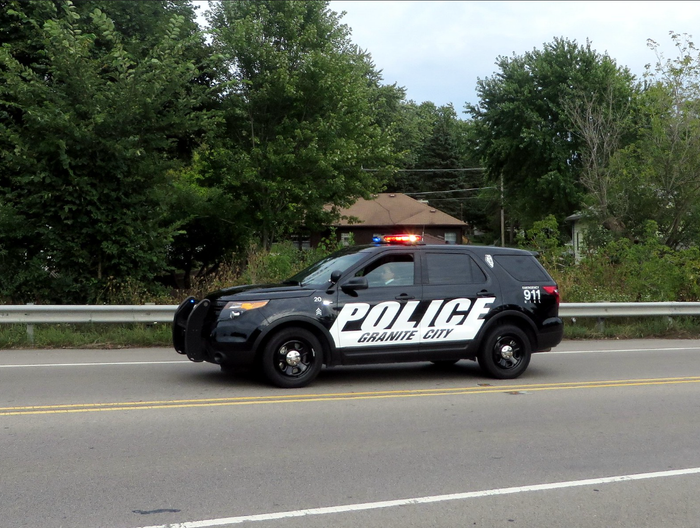
You need a civil rights litigations lawyer the moment you understand that the system will not police itself. When a Granite City, Illinois officer called a mother a “stupid Muslim bitch” and “f’ing Muslim bitch” for wearing a hijab — then slammed her teenage son’s head against metal bars while she watched — no internal affairs unit volunteered to make it right. We filed a $15 million federal lawsuit under Section 1983 naming the officers and the city itself. That is what this work requires: naming names, filing in federal court, and refusing to let the government bury the truth in an administrative file. You need this kind of lawyer when you have been shot, beaten, choked, tased, or falsely arrested by someone wearing a badge, and you refuse to accept a quiet settlement that buys your silence while leaving the same officers on the street. We have secured a $5 million settlement for a man who suffocated when police knelt on his body during an arrest in Phoenix, a $5 million settlement for a wrongful death in Burlington, Iowa, a $4.5 million settlement for a man tased and killed by police, a $2 million settlement for a wrongful killing by Chicago police, and a $2.6 million verdict in Stockton, California for a child killed when a police cruiser struck a car. Those results came because we treated each case as one headed for trial — and the other side knew it.
The fear that no lawyer will take on a politically exposed case is rational. Most will not. We are led by a retired Marine Corps officer with 22 years of service and over 80 jury trials. We do not decline cases because the optics are uncomfortable. We do not pressure clients to fold for a quick fee. We file the lawsuit, we conduct discovery, we depose the officers, and if the government will not accept a resolution that includes real accountability, we pick a jury. If you were silenced, targeted, or brutalized by a government entity, and you want a precedent — not just a check — you need a civil rights litigations lawyer who has already stood in that courtroom and intends to stand there again.
How to Document Civil Rights Violations: Preserving Evidence, Recording Interactions, and Obtaining Witness Statements
Send Spoliation Letters Immediately. The single most consequential step you can take is demanding that all evidence be preserved. At The Law Offices of Haytham Faraj, we immediately send spoliation letters to every entity that may hold relevant material — the police department, the city, private businesses, and any third-party security contractors. These letters legally obligate the recipient to retain surveillance footage, body-worn camera data, black box recordings from patrol vehicles, internal affairs files, dispatch logs, and maintenance records. If they destroy evidence after receiving a spoliation demand, they expose themselves to severe sanctions in federal court, including an adverse inference instruction that tells the jury they destroyed evidence because it would have hurt their case. Do not wait. Surveillance footage is often overwritten in 30 to 90 days. A spoliation letter freezes that clock.
Record Every Interaction You Legally Can. If you are in a public space where you have no reasonable expectation of privacy, you have a First Amendment right to record law enforcement officers performing their duties. Turn on your phone’s camera before the encounter escalates. Hold the device steady. Narrate what you are seeing — badge numbers, patrol car markings, physical descriptions of officers, and the exact words being spoken. If you are the person being detained, state clearly if you are injured, if you cannot breathe, or if you are complying. That audio will become critical evidence when officers later write reports that contradict what actually happened. If you are a bystander, maintain a safe distance so you cannot be accused of interfering, but keep recording. Multiple angles from multiple witnesses destroy the credibility of a sanitized official narrative.
Secure Witness Identities Before They Vanish. Bystanders scatter after a use-of-force incident. Fear of police retaliation, immigration concerns, or simple reluctance to get involved means witnesses disappear fast. If you are physically able, approach anyone who saw what happened and ask for their name and phone number. Do not debate the facts with them. Just get the contact. If you are injured or detained, ask a family member or friend on the scene to do this immediately. Witness testimony is often the only counterweight to a wall of officer statements. An independent witness who has no relationship to you and no criminal record is gold in a civil rights trial. We will interview them, take a recorded statement, and protect them from intimidation throughout the litigation.
Preserve Your Physical Body as Evidence. Photograph every injury — bruises, cuts, taser barb punctures, restraint marks on wrists and ankles — within hours, before swelling fades and discoloration shifts. Go to a hospital or urgent care immediately, even if you think the injuries are minor. Tell the treating physician exactly what happened and ask them to document every complaint in the medical record. That record is created before any lawsuit is contemplated, which makes it powerfully credible to a jury. Keep the clothing you were wearing. Do not wash it. Blood spatter, torn fabric from being thrown to the ground, and gunshot residue can all be forensically analyzed. Store everything in a clean paper bag, not plastic, to prevent degradation.
Write Down Everything While It Is Raw. Within 24 hours, sit down and write a narrative of what happened — every detail, every word spoken, every officer involved, the sequence of events, the weather, the lighting, who else was present. Memory degrades quickly, and the defense will exploit any inconsistency between your initial account and later testimony. This contemporaneous written record is not just a memory aid; it is evidence that can be used to refresh your recollection at deposition and trial, and it demonstrates to a jury that you were careful and credible from the very first moment.
State-Specific Civil Rights Statutes vs. Federal Claims: California Bane Act and Illinois Laws
Federal claims under Section 1983 are the backbone of civil rights litigation, but they are not your only weapon — and in many cases, they are not your best one. State-specific civil rights statutes often provide broader protections, fewer procedural hurdles, and a direct path to accountability that federal law cannot match. At The Law Offices of Haytham Faraj, we deploy both federal and state claims simultaneously because we prepare every case for trial from day one, and we will use every available legal tool to hold government actors accountable.
The California Bane Act, codified at California Civil Code section 52.1, according to Civil Code § 52.1 - California Legislative Information, is the single most powerful state-level civil rights statute on the West Coast. Unlike a Section 1983 claim, which requires proving a constitutional violation under color of law, the Bane Act creates a private right of action against anyone — government official or private actor — who interferes by threats, intimidation, or coercion with rights secured by the U.S. Constitution or California law. The critical distinction is the lower threshold: a plaintiff does not need to prove the defendant acted with specific intent to violate a known constitutional right, a requirement that has frustrated many federal excessive force cases. Under the Bane Act, the focus shifts to whether the interference was intentional and whether coercion was inherent in the violation itself. A chokehold that renders an unarmed person unconscious, a baton strike to a restrained individual’s head, or a shooting of a person who posed no immediate threat — these acts carry their own coercion. California courts have recognized that when an officer uses excessive force, the coercion element may be satisfied by the violation itself, especially after the California Supreme Court’s decision in Cornell v. City and County of San Francisco clarified the standard. The Bane Act also permits recovery of civil penalties of $25,000 per violation, punitive damages, and mandatory attorney’s fees, according to Civil Code § 52.1 - California Legislative Information — a provision that ensures we can fight a well-resourced police department to trial without the client bearing the financial burden.
Illinois law offers its own distinct advantages. The Illinois Civil Rights Act of 2003 prohibits discrimination and excessive force by government entities, and critically, it does not require a plaintiff to navigate the qualified immunity doctrine that shields individual officers in federal court. Qualified immunity is the single greatest barrier to federal civil rights accountability — it demands a plaintiff show the right was “clearly established” in a nearly identical prior case. Illinois state claims can bypass this entirely. Additionally, Illinois courts have recognized common law claims for assault, battery, and wrongful death against police officers, which carry no qualified immunity defense and allow a jury to assess punitive damages directly against the individual officer. Our firm has filed these claims in Illinois federal and state courts, including a lawsuit against Granite City alleging excessive force and religious discrimination where officers beat a teenager and hurled anti-Muslim slurs at his mother. That case, seeking $15 million in damages, was filed under Section 1983 and Illinois state law precisely because the combination maximizes pressure on the defendants and removes escape hatches. For clients who fear being silenced by a system designed to protect its own, this dual-track strategy — Bane Act in California, Illinois Civil Rights Act and common law torts in Chicago — is how we ensure the fight reaches a jury.
Step-by-Step Timeline of a Civil Rights Lawsuit: From Intake to Trial
Free Case Evaluation and Intake. Your fight begins with a confidential, no-obligation consultation — available 24/7. We listen to what happened, identify the constitutional violations at stake, and give you a direct, honest assessment of the legal path forward. We evaluate whether the government actor crossed the constitutional line and whether we are the right trial-ready team to hold them accountable. If we take your case, you pay nothing up front — our fee is contingent on winning.
Immediate Evidence Preservation. Before the government can “lose” body camera footage or pressure witnesses, we fire off spoliation letters to every agency and third party holding records. We demand preservation of dashcam and surveillance video, radio logs, disciplinary files, and all physical evidence. We move fast because evidence has a way of disappearing when a police department realizes it is facing a genuine civil rights challenge.
Filing the Complaint in Federal Court. We draft and file a Section 1983 complaint laying out the specific constitutional violations — excessive force, false arrest, malicious prosecution, denial of medical care, or First Amendment retaliation. This is the document that names the individual officers, their supervisors, and the municipality itself under Monell liability. We do not file vague pleadings hoping to figure it out later. We file with the trial in mind from day one.
The Motion to Dismiss Fight. The government’s first move is almost always a motion to dismiss, typically asserting qualified immunity. This is the doctrine that shields officers from liability unless the right they violated was “clearly established.” We brief these motions aggressively, citing the precise precedent that puts every reasonable officer on notice. Many firms see this as a box to check. We see it as the first battle in a war of attrition against institutional power.
Discovery — The Long Fight for the Truth. This is where we dig. We serve interrogatories, requests for production, and requests for admission on the officers, the department, and the city. We subpoena training records, internal affairs files, prior complaints against the same officers, and communications that reveal what the department knew and when. We depose every officer involved, every supervisor, and every Monell witness. We do not take objections at face value — we motion to compel when the government stonewalls. Discovery can last 12 to 18 months. We use every day of it to build the record for trial.
Expert Witness Disclosure and Reports. We retain and disclose nationally recognized experts in police practices, use of force, forensic pathology, and economic damages. Their reports translate the constitutional standard into concrete, jury-accessible conclusions: the officer’s actions were not objectively reasonable, the department’s training was deliberately indifferent, the asphyxiation was positional and preventable. The government will hire its own experts to say the opposite. This battle of the experts is often where cases are won or lost.
Summary Judgment — The Qualified Immunity Reckoning. After discovery closes, the defense will move for summary judgment, arguing that even viewing the facts in your favor, no constitutional violation occurred or qualified immunity applies. This is the most dangerous procedural hurdle in any civil rights case. We brief it with the same intensity we bring to trial, anchoring every argument in the deposition testimony and documentary evidence we fought to obtain. If we defeat summary judgment, the case is almost certainly going to trial — because we do not fold when the courthouse doors finally open.
Settlement Negotiations — On Principle, Not Capitulation. Throughout the case, we engage in settlement discussions, but never from a position of weakness. A $5 million settlement for a man suffocated during arrest in Phoenix or a $2.6 million verdict for a child killed by a police cruiser in Stockton did not come from lawyers who were afraid to try the case. We evaluate every offer against one standard: does this achieve accountability and justice for our client, or is it a quiet payout designed to make the problem go away? We advise. You decide. We never pressure a client to settle to avoid trial.
Trial — The Reckoning. If the government refuses to be held accountable on reasonable terms, we try the case to a jury. We have done this over 80 times. We present your story with the force and clarity it deserves, calling the officers to the stand, cross-examining them on their own body camera footage, and demanding a verdict that says: this conduct will not be tolerated in a free society. We prepare every case as if trial is inevitable from the moment we sign the retainer. That is not a slogan. It is the only way to win.
Damages in Civil Rights Cases: Beyond Compensatory to Punitive Damages and Attorney’s Fees
The money matters, but not for the reason most people assume. When you bring a civil rights lawsuit under Section 1983, you are not filing a personal injury claim — you are enforcing the Constitution. The damages available reflect that fundamental distinction. Compensatory damages make you whole for what was taken: medical costs, lost income, emotional anguish, and the physical pain of a false arrest or a baton strike that shattered bone. Those sums are necessary. They are not the point. The point is what comes next.
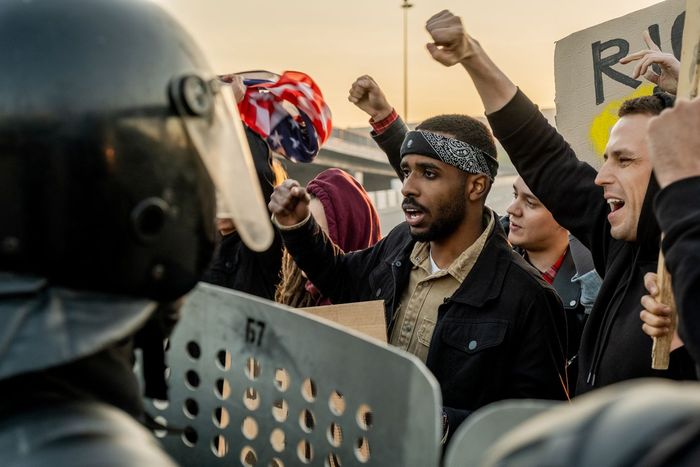
Punitive damages exist to punish and to deter. They are awarded against individual officers — not the municipality — when the conduct shocks the conscience. A jury must find that the officer acted with reckless or callous indifference to your federally protected rights. This is not a rounding error added to a settlement worksheet. It is a public condemnation. When we filed a civil rights lawsuit against Granite City, Illinois, alleging excessive force and religious discrimination against a teenager and his mother, the complaint sought $15 million — not as a valuation of suffering, but as a number calibrated to force institutional change. That is the function of punitive damages: to make the next officer pause before slamming a handcuffed child against a metal door. They are rare. They are difficult to obtain. We pursue them anyway because a verdict without a deterrent is just a receipt.
Attorney’s fees shift the balance of power. Under 42 U.S.C. § 1988, a prevailing plaintiff in a civil rights action is entitled to recover reasonable attorney’s fees from the defendant. This statute exists for one reason: to ensure that a person whose constitutional rights were violated can find counsel willing to fight a government body with unlimited legal resources. The government pays our fees when we win. You do not. Our firm operates on a contingency basis — no fee unless we prevail — and the § 1988 fee-shifting provision means that the city, the county, or the police department will ultimately bear the cost of the litigation. This is how Congress chose to level the field. It is why we can take on a case that other firms decline because it is politically exposed or culturally charged. We are not dependent on a quiet settlement to get paid. We are prepared to try the case, and the law ensures we can afford to do so.
Nominal damages carry their own weight. Even if a jury awards one dollar, that dollar establishes a constitutional violation. It triggers fee-shifting. It creates a finding that can be cited in the next case, against the same officer or the same department. That is precedent. That is how you protect the next family. That is why we fight.
Intersectional Civil Rights: Protecting Immigrants, LGBTQ+ Individuals, and People with Disabilities
Civil rights violations do not occur in a vacuum. They strike at the core of who you are — your faith, your immigration status, your sexual orientation, your disability. The Law Offices of Haytham Faraj does not flinch from these cases. We file them. When a Granite City, Illinois teenager was beaten by officers who called his hijab-wearing mother a “stupid Muslim bitch” and slammed his head against metal bars while she watched in terror, we filed a $15 million federal lawsuit under Section 1983. That case is not an outlier for us. It is the mission. Our multilingual team — offering services in English, Spanish, Armenian, Arabic, and Farsi — is built to communicate with communities that the system routinely ignores or targets, and our founder’s recognition as a Most Influential Minority Attorney signals exactly where we stand.
undefinedFor immigrants, the fear of law enforcement is compounded by the threat of deportation or retaliation. A police encounter that escalates into excessive force is a Fourth Amendment violation regardless of citizenship status, and no government actor gets a pass because a victim lacks a certain document. We pursue these claims aggressively, knowing that a precedent against a police department protects every person in that jurisdiction. For LGBTQ+ individuals, discriminatory animus often fuels the unreasonable use of force or false arrest. We name the bias. We put it before a jury. We demand that the record reflect not just what was done, but why. And for people with disabilities — particularly those with mental health conditions or mobility impairments — officers too often mistake a disability for defiance, deploying tasers, restraints, or lethal force against someone who needed a crisis intervention, not a beating. Qualified immunity does not shield an officer who ignores a known disability and uses force that any reasonable officer would recognize as unconstitutional.
The institutional machinery will try to isolate you, to make you feel that your identity makes your case too complicated or too politically charged. We reject that. Our trial-ready philosophy means we prepare every case for a jury from day one, because a public verdict — not a quiet, confidential resolution — is what shifts the conduct of entire departments. We have stood in federal court against cities with unlimited legal budgets. We have won multi-million dollar verdicts. We do not pressure clients to fold. We fight to set the precedent that protects the next family.
Filing Complaints with Internal Affairs and Oversight Agencies: A Practical Guide
File the complaint immediately, but do not expect the agency to build your civil case for you. Internal affairs divisions and civilian oversight boards are not your advocates — they are internal mechanisms designed to manage liability and discipline. File your complaint within the jurisdiction’s deadline, which is often as short as 30 to 90 days from the incident. In Chicago, complaints to the Civilian Office of Police Accountability must typically be filed within five years for most misconduct, but certain allegations carry shorter windows. In Los Angeles, complaints to the Los Angeles County Sheriff’s Department or the LAPD’s Internal Affairs Group should be submitted as soon as possible to preserve the integrity of any body-worn camera footage, which agencies routinely purge after 60 to 90 days if no complaint triggers preservation. The complaint itself creates a paper trail, locks down evidence, and forces the agency to generate records that your civil rights attorney can later obtain through a Freedom of Information Act request or discovery in a Section 1983 lawsuit.
undefinedState exactly what happened in plain, chronological terms — do not editorialize or demand specific discipline. Begin with the date, time, and precise location. Identify every officer involved by name, badge number, or physical description if names are unknown. Describe each use of force, racial or religious slur, or constitutional violation in the order it occurred. If an officer called a family member a slur — as our firm documented when Granite City officers directed Islamophobic epithets at a mother wearing hijab — that fact belongs in the complaint verbatim. Stick to what you personally saw, heard, and felt. Avoid legal conclusions like “excessive force” or “Fourth Amendment violation”; instead, write “Officer Doe struck my son’s head against a metal door after he was handcuffed.” Those factual details become admissions the agency cannot later deny if they are captured in the complaint narrative.
Request all identifying evidence and demand preservation in writing. At the end of your complaint, add a sentence directing the agency to preserve all body-worn camera footage, dashcam video, 911 call recordings, dispatch logs, and any surveillance footage from nearby businesses or city cameras for the date and time of the incident. This is a spoliation demand — if the agency destroys evidence after receiving it, a federal judge can instruct a jury to presume that evidence was unfavorable to the officers. The Law Offices of Haytham Faraj sends formal spoliation letters immediately upon taking a case, but your own written request in the complaint starts that clock.
Obtain a copy of the complaint and the assigned case number before you leave. If filing in person, insist on a stamped receipt. If filing online or by mail, send it via certified mail with return receipt or take a screenshot of the confirmation page. The case number is how your attorney tracks the internal investigation and later subpoenas the complete internal affairs file. Without it, the agency will claim it has no record of your complaint.
Do not give a recorded statement to internal affairs without counsel present. Investigators may contact you for a follow-up interview. You have the right to have an attorney with you. Anything you say in that interview can be used to impeach you later in a civil deposition or trial. Let your civil rights lawyer handle the interface with the agency from that point forward — our firm prepares every client for these encounters because we know the agency is building a defense, not a case for accountability.
Civil Rights Litigation vs. Criminal Proceedings: Key Differences and Strategic Considerations
Civil rights litigation and criminal proceedings are entirely separate legal paths that serve fundamentally different purposes — and understanding this distinction is critical for anyone seeking true accountability. A criminal prosecution is the government’s case against the officer. The state decides whether to file charges, the standard is proof beyond a reasonable doubt, and the remedy is punishment: incarceration, probation, or termination. The victim is a witness, not a party. You do not control the case, you cannot compel the prosecutor to act, and the system is structurally reluctant to charge its own. A civil rights lawsuit under Section 1983 is your case. You are the plaintiff. You control the litigation. The burden of proof is a preponderance of the evidence — a far lower bar — and the remedy is not jail time but a public finding of liability, compensatory damages, punitive damages, and attorney’s fees that shift the financial cost onto the government entity that enabled the misconduct.
The strategic implications are profound. An officer may be acquitted in criminal court — or never charged at all — and you can still win a civil rights trial. The Law Offices of Haytham Faraj prepares every case for a jury from day one precisely because a criminal acquittal does not end the fight for a precedent-setting civil verdict. Consider the separate timelines: a district attorney’s charging decision often comes within days or weeks, heavily influenced by political pressure and union relationships. A civil rights lawsuit, by contrast, allows for methodical discovery — deposing officers, obtaining internal affairs files, body camera footage, and use-of-force reports that the criminal process may never surface. This discovery can expose patterns of abuse that a single criminal trial will ignore. When we filed a federal civil rights lawsuit against Granite City, Illinois, alleging excessive force and religious discrimination against a teenager whose mother wore a hijab, the criminal system had done nothing. The civil complaint — seeking $15 million — became the mechanism to force the officers and the city to answer for conduct that included slamming the boy’s head against metal doors while his mother watched. That is the power of a civil rights case: it is not about a plea deal struck in a back room. It is about a public record, a jury’s finding, and a judgment that names the wrongdoers and the municipality that employs them. For families who want to hold a powerful institution publicly accountable — not just collect a check — the civil courtroom is the arena where precedent is built and where the truth, suppressed in a criminal investigation, can finally be aired.
Holding Private Actors Accountable: Civil Rights Violations by Security Guards and Businesses
A private security guard, a bouncer, or a business can violate your civil rights — and they can be held accountable under state law even when federal Section 1983 does not apply because the abuser was not a government employee. The Law Offices of Haytham Faraj has litigated precisely these cases. When a private actor uses force, detains you without legal authority, or discriminates based on race, religion, or national origin, your rights do not vanish simply because the badge says “security” instead of “police.”
State law provides the backbone for these claims. In California, the Ralph Civil Rights Act (Civil Code § 51.7) protects against violence or intimidation by threat of violence motivated by a protected characteristic — and it applies to private actors, not just the state. The Tom Bane Civil Rights Act (Civil Code § 52.1) goes further, creating a private right of action when anyone, including a security guard or business owner, interferes by threats, intimidation, or coercion with your constitutional or statutory rights. Illinois law offers a parallel path through the Illinois Hate Crime Act (720 ILCS 5/12-7.1) and common law tort claims for false imprisonment, assault, and battery. These statutes matter because they carry attorney’s fee provisions — meaning a private company that thought it could intimidate you into silence may end up paying for your lawyer.
Resources for victims start with immediate documentation: demand the business preserve all surveillance footage through a spoliation letter, photograph your injuries, and obtain witness contact information before memories fade or pressure is applied. File a complaint with the state licensing agency that regulates private security — in California, the Bureau of Security and Investigative Services; in Illinois, the Division of Professional Regulation. These agencies can suspend or revoke a guard’s license. Simultaneously, report the incident to the local district attorney’s office or state attorney general’s civil rights division. We have seen cases, like our firm’s $15 million civil rights lawsuit in Granite City, Illinois, where religious discrimination and excessive force intersected — and where private actors or off-duty officers acting under color of law attempted to shield themselves behind institutional indifference. That shield breaks when you have counsel willing to prepare every case for trial from day one. If a business or its security personnel battered you, falsely imprisoned you, or targeted you because of who you are, you do not need a government defendant to demand justice. You need a firm that treats state civil rights statutes as weapons, not afterthoughts.
Those Who Can, Must Fight To Protect Those Who Cannot Protect Themselves. The Law Offices of Haytham Faraj is a small law firm dedicated to helping people who have been hurt by the neglect or wrongful acts of others. We are Trial-Ready Attorneys. We are Veteran-led representation. Championing Justice, Embracing Integrity, Empowering Lives — this is not a tagline. It is the standard we bring to every civil rights case, from the first spoliation letter to the final jury instruction. If your constitutional rights were violated by police, corrections officers, or any government actor, book a free CONSULTATION today. We will listen. We will tell you the truth. And if we take your case, we will prepare it for trial from day one — because that is the only way to win.
Sources
Frequently Asked Questions
What is the first thing I should do after a police misconduct incident?
Send spoliation letters immediately to preserve evidence like surveillance footage, which is often overwritten in 30–90 days. Also record interactions if legally possible.
Can I record police officers during an encounter?
Yes, in public spaces where you have no reasonable expectation of privacy, the First Amendment protects your right to record law enforcement officers performing their duties.
What is qualified immunity and how does it affect my case?
Qualified immunity is a legal shield that protects government officials from liability unless they violated a clearly established constitutional right. A skilled attorney can overcome it.
What types of damages can I recover in a civil rights lawsuit?
You may recover compensatory damages for medical costs, lost wages, and pain and suffering, as well as punitive damages to punish egregious misconduct and deter future violations.
How long do I have to file a civil rights lawsuit?
Statutes of limitations vary by state and claim type, but they can be as short as one year. Contact an attorney immediately to avoid missing critical deadlines.